My favorite podcast... the podcast that got me listening to podcasts... is about a dead person. No, it's not Serial. It's Mark Malkoff's The Carson Podcast. Malkoff, a behind-the-scenes veteran of numerous shows, as well as a comedian in his own right, has been offering his podcast since February of 2014. Every week, he speaks to someone with a connection to the late Johnny Carson, former host of NBC's The Tonight Show.
From 1962 to 1992, Carson went from being a talented television personality to the Emperor of Late Night. Yes, calling him a mere "king" seems inadequate, especially in light of the fact that his empire was divided and never reunified after his retirement. It could be said that a great deal of Carson's appeal as an everyman mid-westerner, with his twinkling smile, world-class wit, and lethal timing, was that the audience "knew" him without truly knowing him. Like many great showmen, Carson cultivated a certain mystique. Yet he managed to keep the balance between familiarity and contempt firmly square. Johnny Carson, in one of show businesses' greatest sleight-of-hand maneuvers, managed to be the most private man in Hollywood while remaining at the top of his field for most of his career.
In recent years, efforts have been made to pull back the multicolored curtain and see the man behind the wizard. Peter Jones' Johnny Carson: King of Late Night, an excellent documentary shown on PBS (and still available on Netflix as of this posting), was the first attempt at summarizing Carson for an America where he is no longer ubiquitous. His former lawyer Henry Bushkin has written a memoir of his time with Carson that is reportedly something of a seedy tome. However, Malkoff's podcast may turn out to be the definitive work on the man. The podcast has gossip, but it is rarely of the warts-and-all variety; Malkoff clearly sees Carson as a folk hero and has expressed mild disappointment with Bushkin's approach. While I share Malkoff's admiration for Jones' film, which delves into Carson's family life in a way rarely seen (and in a way one imagines Carson himself would have squashed were he alive to do so), it is also too short to truly capture the full picture of Carson's influence, both in the 20th Century as well as today. In short, Malkoff isn't keeping Carson relevant, he's exploring the reasons why Carson remains relevant, a generation later.
Many high school seniors who graduated the year Carson retired turned 40 this year. Likewise, a number of Tonight Show alumni reach Mark Malkoff in a reflective and jovial mood, much like people attending a school reunion where everyone grew up to be incredibly successful. Truly, Carson's legacy is seen in the Tonight Show writers, many of whom have gone on to even higher heights. So, too, have the comedians, and it is interesting to note how Carson's blessing and the tacit endorsement of being called over to the panel essentially created dozens of the most prominent careers in comedy. An unintentional running gag of the podcast comes in the form of the guest revealing that, while Carson allegedly "never" visited with his guests before the show, that exceptions were gladly made for people who the host found interesting or with whom he had built a rapport; if there were a Carson Podcast drinking game, Johnny visiting before the taping would be the point at which you finished your drink.
While I've never met Mark Malkoff, we've exchanged tweets here and there. His personality is light, friendly, and, as you might expect from a fan discussing a favorite topic, slightly reverential. The podcast is always PG-13, with any word you might not hear on late night TV today bleeped out. This is in no way to its detriment; the podcast is largely about the Carson legacy and his mystique, and that can be told without crass language. Malkoff himself has referred to some of the stories about Pat McCormick, the hell-raising former Tonight Show writer who famously streaked on-air, as outside of his comfort zone. While that might disappoint those looking for the definitive version of the helicopter story (no, I'm not going to elaborate; you can do your own research), I suggest that Malkoff is correct to be so judicious in his tone. For evidence as to why, I point you to fellow alliteratively-named comedian Gilbert Gottfried's Amazing Colossal Podcast. While Malkoff and Gottfried are about as diametrically opposed as two people could be (What little I know of Malkoff's comedy career suggests that he doesn't work blue, and even if he occasionally dropped the f-bomb, there's no way he could be as depraved as the legendary Gottfried), their podcasts occasionally cover very similar ground; in addition to being one of the smuttiest standups alive, Gilbert Gottfried is also a rather serious film buff and clearly loves talking about old show-business. In this regard, Amazing Colossal Podcast is either Carson Podcast's evil twin or Bizarro clone, because Gilbert Gottfried has gladly covered Pat McCormick and the helicopter story in graphic and lurid detail, but he lacks Mark Malkoff's focus as an interviewer, not to mention his respect for all of his guests (And yet, oddly, this disrespect is why I listen to the ACP, in spite of it occasionally turning into a one-man roast).
(One last aside about the strange parallel between these two podcasts, which I acknowledge may only exist in my mind: Gottfried will likely never appear on Malkoff's podcast, mostly because I don't think he ever appeared on The Tonight Show with Johnny, but there is a part of me that would be interested in hearing Gottfried and co-host Frank Santopadre interview Malkoff. "Weird Al" Yankovic managed to skillfully and good-naturedly deflect Gottfried's attempts to draw him into filthy humor, and I imagine Malkoff would do the same. That said, I think the two of them would have a lot of interesting things to talk about, specifically Gottfried 's recollections and perspective on comics and personalities who are no longer around to be interviewed, but appeared with Carson. I think it would be an interesting addendum, so I'm putting it out there in hopes that both parties make it happen someday.)
While the show centers on Carson, this is not to say that Malkoff is so focused that he doesn't let his guests roam off the reservation a bit. He allows his subjects to add context to the interview by covering the world beyond Carson. (Yes, one exists.) Their careers before and since Carson, their Tonight Show experiences pre- and post-Johnny, David Letterman's late night and daytime offerings, and all of these meanderings serve the podcast's central thesis, if it can be said to have one, which is Carson's overall influence on entertainment and (more so than the Jones documentary, I would argue) the quiet, curious soul of the man himself.
That Carson touched lives is crystal clear. But the podcast is inching closer, almost like a novel, to a clearer portrait of who Carson really was; think Citizen Johnny and you're starting to get the idea. While Malkoff hasn't interviewed too many people who might have a harsh word to say about Johnny (i.e. none of the ex-wives, nor his widow or surviving sons, nor Henry Bushkin have made an appearance, and the only blood relative interviewed so far has been Jeff Sotzing, Carson's nephew and the controller to the surviving archive of The Tonight Show Starring Johnny Carson), the podcast isn't meant to cover peccadilloes and settle scores. That said, recent episodes have increasingly given a peek into Carson's inner life. Jim Fowler offers an unassuming and endearing recollection of a man with a curious mind and a daring spirit. James Randi offers a heartfelt and tearful appraisal of a man with a fierce intelligence and a dedication to reason led him to expose charlatans on-air and offer considerable support to Randi's organization. Bob Saget and Paul Provenza offer memories of an avuncular craftsman, sharing his wisdom with two rising journeymen. With the help of Mark Malkoff's friendly and encouraging presence, the podcast conjures up a romanticized yet, I feel, largely accurate picture of the man. Like Charles Foster Kane in Orson Welles' film, Johnny Carson isn't waiting for us at the end of the podcast, but he lives on in these stories, more alive than in the clips his nephew posts regularly to YouTube.
This approach, a podcast devoted to a single figure, is so evocative and effective, like a serialized oral history, that it won't surprise me to see historians mimic it for their own efforts. I can easily see a presidential library or a society devoted to a particular author or filmmaker making good use of this format.
The trick, of course, is to cover the subject while the people involved are still alive. You could fill pages with the names of notable guests and colleagues who are no longer with us. The most notable absences are most likely announcer, sidekick, and erstwhile friend Ed McMahon and producer and occasional whipping boy, Fred de Cordova, but like Carson they show up in stories and anecdotes. (While Malkoff has a clear fascination with de Cordova and his strained relationship with Carson, Ed McMahon comes across like a relative cypher in the podcast, though there's probably a good reason for that: Malkoff occasionally throws in a game "Let's talk about Ed" to which the guest invariably replies some variation on, "Well... Ed was Ed." Another one for the Carson Podcast Drinking Game.)
In spite of these absences, Malkoff keeps providing conversations with those who survive. He's reportedly approaching Doc Severinson, the bandleader during most of Johnny's run and the most significant surviving figure from that era of the show (after Peter Lassally, who has already granted a rare interview to the podcast). Each week, opening iTunes or Twitter to see who Mark has talked to is like a little Christmas morning and the listening itself is always an amusing, enjoyable experience.
Finally, it's interesting to see something of the quality and depth of The Carson Podcast emerge from the podcast form. The podcast is more than just radio on the Internet. Let's be honest: no radio station anywhere would buy a show like The Carson Podcast. In spite of the big name guests and fascinating subject matter, I think that most stations would laugh at the idea, if only because they would question its ability to sell airtime or, in the case of public radio, they would wonder how many listeners it served. Yet it's an important, smart, funny show that preserves something for posterity. It opens the door for other highly focused podcasting and demonstrates that there is a place in the world for something that you don't see often on TV or hear on the radio that much anymore: Good, intelligent conversation. For that much, Johnny would gladly wave Mark Malkoff over to the panel.
The Carson Podcast is here: http://carsonpodcast.com/
On iTunes: https://itunes.apple.com/us/podcast/the-carson-podcast/id824049190?mt=2
Sunday, November 30, 2014

Wednesday, October 9, 2013
GRAVITY is the Best Science-Fiction Film in Decades
by C. Christopher Hart
The first part of this review is spoiler-free.
Gravity is the best science-fiction film in decades. In spite of our regular diet of 3D, big budget spectaculars, we don’t get many honest-to-goodness science-fiction films. Most popular movies that take place in outer space should be called “science-fantasy.” If you are hearing sound effects and explosions in the dead of space, you are watching “science-fantasy.” Gravity does, according to Neil DeGrasse Tyson, head of the Hayden Planetarium in New York, bend quite a few rules of physics, but even he admits, via Twitter, to enjoying the film “very much.”
 |
| Dr. Ryan Stone (Sandra Bullock) |
You should not only see this film in theaters, I also strongly encourage you to see it in 3D. One of the reasons we American moviegoers tend to prefer superheroes and Jedi Knights in our entertainment is the spectacle they bring with them. There’s lots of explosions and very unlikely violence. This is fun, but it’s not to be confused with anything too consequential. Director Alfonso Cuaron is no stranger to this sort of fantasy filmmaking, having directed the only watchable edition of the Harry Potter series (2004’s Harry Potter and the Prisoner of Azkaban). He manages to create a 3D film that uses the medium to its full potential. Gravity is a fully immersive film experience, bridging the gap between the adrenaline rush of a Hitchcock thriller and the visual daring of James Cameron. It approaches, but does not surpass, Kubrick’s 2001: A Space Odyssey; the fact that I can even make that statement with a straight face should give you an idea of how much I respect what Cuaron has achieved.
 |
| Commander Matt Kowalski (George Clooney) |
Before I talk about the movie itself, a quick plea… bring kids to see it. I think it would be nice if kids wanted to grow up to be astronauts again. I know it’s PG-13 and there are swears in it, but it’s nothing your little angels haven’t heard before when you stub your toe or burn your finger. Considering what Sandra Bullock goes through, I’m surprised she didn't say more. If it were me, I would eventually have Mission Control asking me to lay off the f-bombs.
Here beginneth the SPOILERS…
 |
| She is not having a good day! |
Gravity is an action film, to be sure, but it never insults your intelligence. It places exceptional people in extraordinary circumstances. In the film, debris from a destroyed satellite wreaks havoc upon billions of dollars of space exploration equipment. Initially, the debris field cripples the Space Shuttle Explorer, sending Bullock’s character, Dr. Ryan Stone, hurtling through the void. After being rescued by the Shuttle’s pilot Matt Kowalski (George Clooney, giving a charming performance as a veteran space cowboy), via his jetpack, they return to find the rest of the crew dead and the Shuttle in no condition to return to Earth. The next option, with oxygen and the thrusters depleted and lack of radio leaving them “in the blind,” is the International Space Station. Unable to guide their approach, Kowalski is forced to sacrifice himself so that Stone, who has a tentative grip on the Station, can save herself. Truly alone, Stone is forced to rely on her wits, skill, and training to get back to Earth or die trying.
Quick note: if "Houston in the blind" doesn't replace "Houston, we have a problem" as a national catchphrase, there is no justice.
The casting of Sandra Bullock, one of America’s best-known film actresses, is a stroke of genius, on par with Hitchcock’s exploitation of James Stewart. Bullock is vulnerable in a way that few Hollywood stars allow themselves to be. While I have no doubt that there are a number of actresses could have given life to Dr. Stone, Bullock brings an eerie teetering between hope and hopelessness to the astronaut. World-weariness has rarely been so literal; after her young daughter’s death in a freak accident, Dr. Stone joins NASA and leaves the planet altogether. Unlike the happy-go-lucky Kowalski, one gets the feeling that Stone is genuinely running from something. Bullock allows herself to go to a dark place, and we follow her. This isn't like Jimmy Stewart in Vertigo, but it’s a cousin to that depiction of a broken human spirit. Dr. Ryan Stone isn't fully connected to the human race at the start of the film. As her adventure unfolds and will to live is challenged, she finds that spirit once again and makes peace with her demons. There is already talk that Sandra Bullock will be looking at gowns come awards season, and I see no reason not to consider her a strong contender.
 |
| Clooney, Bulock, and director Alfonso Cuarón |
Cuaron, though, is the true star of Gravity. In trusting that his audience is sophisticated and hungry for this kind of spectacle, he creates the foundation of the latest leg of his career: director of intelligent blockbuster films. In making the decision to infuse the film with humor both dark (a floating Marvin the Martian figurine joins the bobbing corpses of astronauts) and goofy (Stone has no access to Earth via radio for most of the film, barring a brief exchange with an Inuit fisherman and his dogs) and even metatextual (casting Ed Harris as the voice of Mission Control), he demonstrates that he is a warrior against the lowest common denominator. Finally, in giving us this film, he opens the door for filmmakers looking to bring intelligence back to action, thriller, and science-fiction films. People have felt physically and emotionally exhausted by this film, as if they went through it themselves. If that isn't movie magic, I don’t know what is.
On a final note, I wanted to remark on the irony of the fact that the #1 film in America during the United States’ first government shutdown in 17 years, features almost exclusively government employees behaving in heroic and selfless manners. That might not mean much to someone reading this five years from now, but it sure feels good tonight.
Wednesday, July 3, 2013
The Quotable DOCTOR WHO, Part 2
 |
| Carole Ann Ford as Susan, 1964 |
- Susan, from "The Singing Sands" (Marco Polo, Episode Two) by John Lucarotti
Monday, July 1, 2013
The Quotable DOCTOR WHO, Part 1
 |
| John Stratton as Shockeye, 1985 |
- Shockeye of the Quawncing Grig, from The Two Doctors by Robert Holmes.
Sunday, June 30, 2013
MAN OF STEEL (2013)
MAN OF STEEL (2013) Director: Zack Snyder
SPOILERS AHEAD
Even though he is the most recognizable of the super heroes, Superman's representation in Hollywood has been hampered in recent years by a demure attempt at a reboot (2006's Superman Returns) and the long shadow of Richard Donner's Superman: The Movie (1978) and its three sequels, which starred the late Christopher Reeve in a performance that both defined the actor and the character (for better and for worse) for a generation. I had a very negative reaction to this new film when I first saw it and found it difficult to enjoy it on its own terms, thanks to one particular story point.
First, it's worthwhile to note what the movie gets right. There are no bad performances in the film; each of the actors deals well with the material and finds their character. Henry Cavill meets the unenviable task of playing an American icon (whilst being British, not as easy as it looks) and creates a charming and human character in a way that is true to the source material and manages to distinguish himself from Reeve. Michael Shannon as Zod separates himself from the fey and, yes, two-dimensional performance of his predecessor Terence Stamp. The film and the actor dispense with the "Kneel Before Zod" theatrics and give the villain a clear and understandable motivation, perhaps even one that the audience might sympathize with, emphasizing the character's implied military background above his dictatorial ambitions. The difference is comparable, in comic book movie terms, to the difference between Jack Nicholson's pop art Joker and Heath Ledger's psychopathic and, perhaps, more realistic take on Batman's archenemy.
While the film suffers from a desire to ape the style of producer Christopher Nolan's Batman films, it does remain visually interesting throughout. The special effects are, of course, astonishing on the occasions when they further the plot (I felt that Zod's doomsday device, the "World Engine," is as menacing a McGuffin as has ever been seen in this sort of film) and boring and confusing when they don't (see Russell Crowe as Jor-El, Superman's biological father, who rides a sort of flying dinosaur-horse... I'm not sure what was going on there, other than a desire to create something that will get kids to buy Jor-El action figures.) The film gets two things fundamentally wrong. The first is Lois Lane. There are only three elements of the Superman mythology that date back to the character's initial appearance: Superman, Clark Kent, and Lois Lane. Literally everything else, every character, every nuance, shows up later on to flesh out the character's history. Another character like that from comics history is Commissioner Gordon, who is similarly the only element from the Batman comics, outside of the main character, that originates from that initial story. In Nolan's Batman films, that importance is noted and Gordon becomes Batman's most important ally (if not Bruce Wayne's; the Gordon in the Nolan films isn't privy to the hero's double identity, ostensibly for his own protection). Lois Lane is, therefore, an important part of the Superman legend. I would argue that she's the most important character to get right, as (like Gordon) she serves as the hero's connection to the real world, a tether that brings the high concept some reality, an ordinary person thrust into extraordinary circumstances.
Unfortunately, the character is very underwritten. The writers have, wisely I think, dispensed with the "two-person love triangle" concept of Lois, who is supposed to be a great reporter, yet unable to tell that the man she is in love with is, in fact, her milquetoast co-worker Clark Kent. Charming though it is, that scenario has always ignored the fact that if Superman can't trust Lois, he has no business loving her in either of his identities. The new dynamic is that Lois is sort of the Boswell to Kal-El, going so far as to (almost) give him his nom du guerre and becoming a trusted partner, a resourceful romantic interest/sidekick who can move the plot and even get the hero out of trouble in certain situations. This newer avenue makes Lois's frequent damsel in distress situations a little more palatable, but one still feels that screen time given to her Daily Planet co-workers would have been more interesting if they were in service to Lois demonstrating her capabilities as a reporter as opposed to setting up victimization set pieces. This isn't to say that Amy Adams doesn't give a great performance; she's just not given as much to work with as she could have been.
The second thing that the film gets wrong is even more shocking and speaks to what I see as a deep misunderstanding of the source material, and I'm referring to the violence and the eventual execution of General Zod. As to the general comic book violence, the film uses special effects in a way that no Superman film has before. The Man of Steel does the usual Superman business of flying, being bulletproof, projecting heat rays from his eyes, and being incredibly strong. And I grant you that the destruction that would follow a group of villains with Superman's range of abilities would be massive, especially if they were fighting one another. But Superman, as a story or myth, really isn't about slugfests.
At the time Superman was created, the 1930s, his stories were on a much smaller scale. In his earliest adventures, Superman saves a woman from the electric chair by storming the Governor's mansion, stops a lynching, interferes with a man beating his wife, torments a corrupt politician in Washington D.C., and saves Lois Lane from an abduction by gangsters (one of whom is attracted to her and pushes Clark out of the way to take her against her will). Created by Jerry Siegel and Joe Shuster, two Jewish teenagers living through the Great Depression, the early Superman is a sort of anarchistic angel, a merry strongman who acts benevolently wherever he finds an injustice. The idea of Superman as a Christ-figure (as presented in Superman Returns as well as this film, and to a lesser extent in the Christopher Reeve films) ignores the purpose of the character. If anything, Superman is more of a Moses-figure (replace floating down the Nile with a spaceship and they even have the same basic origin story), an exceptional man who protects and gives wisdom, who shows a moral way of living and uses his great abilities not for personal gain, but for the purpose of inspiring ordinary people with his example.
It's inconsistent, though. If you're setting up Superman as a Christ-figure, why is he punching anyone? If Superman is meant for greater things, to inspire humanity, and if he's like a god to us mortal and fragile human beings, why is he not setting a higher moral example? Specifically, why is he unable to resolve the problem presented by General Zod without killing him?
I'm not suggesting that there was a better way of resolving the Zod plot-line than killing him off. I can buy that it made dramatic sense, or that Shannon might not have wanted the door open for a return engagement, but there should have been a way of doing it without making Superman the executioner. The idea that Kal-El's parents sent him to Earth because they had hope, and the idea that he was raised as Clark Kent to resolve matters with his mind and use his gifts for good, and the thread that his parents see great things for him is entirely negated for me by the idea that this "greater thing" is a spontaneous and knee-jerk execution.
Maybe if there was time for him to talk about the consequences of his actions and discuss the toll it would obviously take on him. Maybe if he made a vow that he would never again take a life for any reason. Maybe if he indicated that he found his actions distasteful and against his own principles. Maybe if any of that had happened, and Superman refuted the notion that the ends justified the means, I could have accepted it.
There's another, bigger logic hole here, though. If these Kryptonians are so powerful and indestructible that they can beat and bash one another without drawing blood or raising so much as a single bruise, how is it possible for even Kal-El to snap Zod's neck? It would seem unlikely to me, given what is established in the film.
I think, though, the bigger problem here is an overall super hero fatigue. These films have become visual wonders, but the stories are lacking in the imagination and thoughtfulness of their paper counterparts. More super hero flicks are on the way, so I may be tilting at a windmill. I think that the wasted opportunity here was to do something more uplifting and life-affirming than the bleakness of Nolan's Batman films and Snyder's earlier Watchmen. The darkness suited those stories, I suppose, but Superman demands a lighter approach. It seems that there will be other opportunities to get it right, as sequels follow superhero movies like stench follows garbage.
SPOILERS AHEAD
Even though he is the most recognizable of the super heroes, Superman's representation in Hollywood has been hampered in recent years by a demure attempt at a reboot (2006's Superman Returns) and the long shadow of Richard Donner's Superman: The Movie (1978) and its three sequels, which starred the late Christopher Reeve in a performance that both defined the actor and the character (for better and for worse) for a generation. I had a very negative reaction to this new film when I first saw it and found it difficult to enjoy it on its own terms, thanks to one particular story point.
 |
| Kneel Before Flying |
 |
| Kneel Before Zod! |
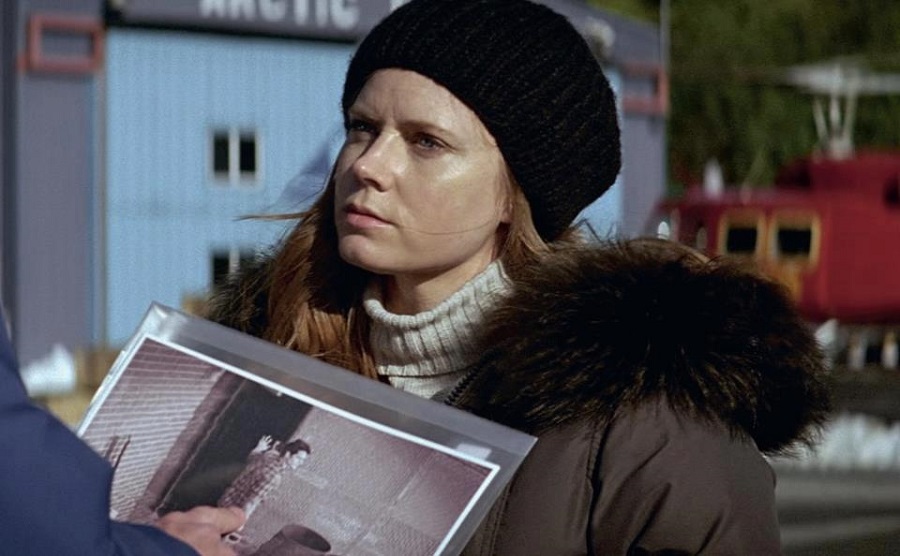 |
Noel Neill Before Amy Adams
(Am I being too nerdy there? Sorry.)
|
The second thing that the film gets wrong is even more shocking and speaks to what I see as a deep misunderstanding of the source material, and I'm referring to the violence and the eventual execution of General Zod. As to the general comic book violence, the film uses special effects in a way that no Superman film has before. The Man of Steel does the usual Superman business of flying, being bulletproof, projecting heat rays from his eyes, and being incredibly strong. And I grant you that the destruction that would follow a group of villains with Superman's range of abilities would be massive, especially if they were fighting one another. But Superman, as a story or myth, really isn't about slugfests.
At the time Superman was created, the 1930s, his stories were on a much smaller scale. In his earliest adventures, Superman saves a woman from the electric chair by storming the Governor's mansion, stops a lynching, interferes with a man beating his wife, torments a corrupt politician in Washington D.C., and saves Lois Lane from an abduction by gangsters (one of whom is attracted to her and pushes Clark out of the way to take her against her will). Created by Jerry Siegel and Joe Shuster, two Jewish teenagers living through the Great Depression, the early Superman is a sort of anarchistic angel, a merry strongman who acts benevolently wherever he finds an injustice. The idea of Superman as a Christ-figure (as presented in Superman Returns as well as this film, and to a lesser extent in the Christopher Reeve films) ignores the purpose of the character. If anything, Superman is more of a Moses-figure (replace floating down the Nile with a spaceship and they even have the same basic origin story), an exceptional man who protects and gives wisdom, who shows a moral way of living and uses his great abilities not for personal gain, but for the purpose of inspiring ordinary people with his example.
 |
A page from Action Comics #1, the first appearance of Superman.
|
It's inconsistent, though. If you're setting up Superman as a Christ-figure, why is he punching anyone? If Superman is meant for greater things, to inspire humanity, and if he's like a god to us mortal and fragile human beings, why is he not setting a higher moral example? Specifically, why is he unable to resolve the problem presented by General Zod without killing him?
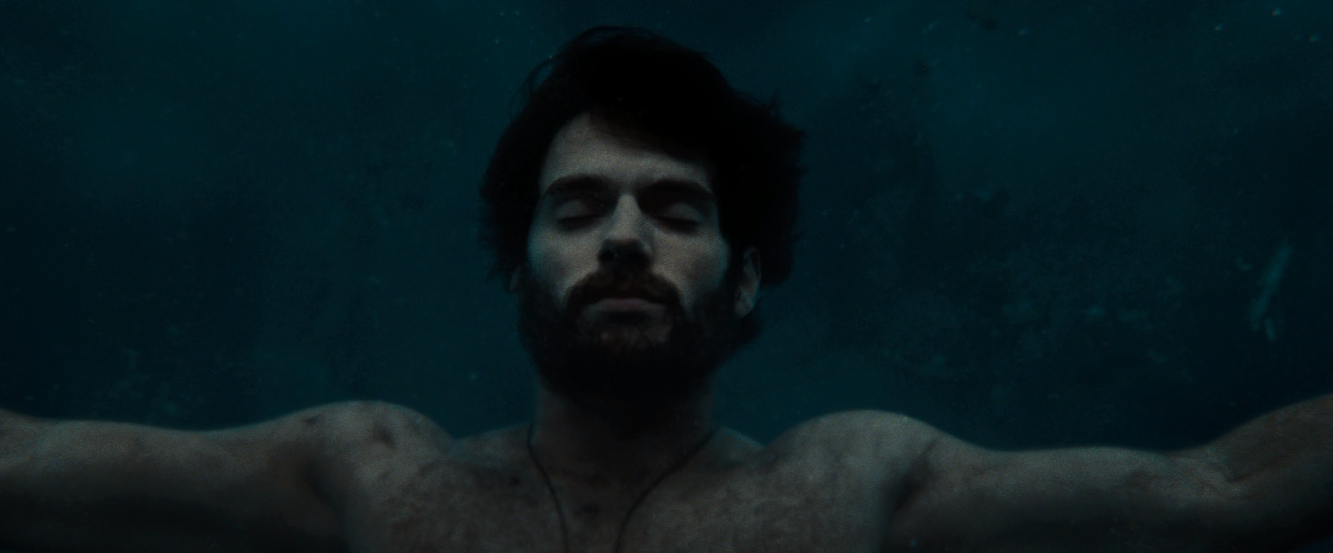 |
Taking "Superman as Christ-figure" to the next level by giving him a beard.
|
I'm not suggesting that there was a better way of resolving the Zod plot-line than killing him off. I can buy that it made dramatic sense, or that Shannon might not have wanted the door open for a return engagement, but there should have been a way of doing it without making Superman the executioner. The idea that Kal-El's parents sent him to Earth because they had hope, and the idea that he was raised as Clark Kent to resolve matters with his mind and use his gifts for good, and the thread that his parents see great things for him is entirely negated for me by the idea that this "greater thing" is a spontaneous and knee-jerk execution.
Maybe if there was time for him to talk about the consequences of his actions and discuss the toll it would obviously take on him. Maybe if he made a vow that he would never again take a life for any reason. Maybe if he indicated that he found his actions distasteful and against his own principles. Maybe if any of that had happened, and Superman refuted the notion that the ends justified the means, I could have accepted it.
There's another, bigger logic hole here, though. If these Kryptonians are so powerful and indestructible that they can beat and bash one another without drawing blood or raising so much as a single bruise, how is it possible for even Kal-El to snap Zod's neck? It would seem unlikely to me, given what is established in the film.
 |
| Superman, again from Action Comics #1, stopping an execution, rather than performing one. |
Saturday, June 29, 2013
Actors with roles in DOCTOR WHO and STAR WARS.
This feels like an incomplete list. Can anyone think of any others?

Boba Fett screen test
Recent talk of a Boba Fett solo film has boosted the breakout character's already over-inflated profile. I'm not sure what to think about *any* of the upcoming STAR WARS films, other than sort of basking in the surreal nature of extending the film franchise into the next decade and beyond.
Subscribe to:
Posts (Atom)