Even though he is the most recognizable of the super heroes, Superman's representation in Hollywood has been hampered in recent years by a demure attempt at a reboot (2006's Superman Returns) and the long shadow of Richard Donner's Superman: The Movie (1978) and its three sequels, which starred the late Christopher Reeve in a performance that both defined the actor and the character (for better and for worse) for a generation. I had a very negative reaction to this new film when I first saw it and found it difficult to enjoy it on its own terms, thanks to one particular story point.
Kneel Before Flying
First, it's worthwhile to note what the movie gets right. There are no bad performances in the film; each of the actors deals well with the material and finds their character. Henry Cavill meets the unenviable task of playing an American icon (whilst being British, not as easy as it looks) and creates a charming and human character in a way that is true to the source material and manages to distinguish himself from Reeve. Michael Shannon as Zod separates himself from the fey and, yes, two-dimensional performance of his predecessor Terence Stamp. The film and the actor dispense with the "Kneel Before Zod" theatrics and give the villain a clear and understandable motivation, perhaps even one that the audience might sympathize with, emphasizing the character's implied military background above his dictatorial ambitions. The difference is comparable, in comic book movie terms, to the difference between Jack Nicholson's pop art Joker and Heath Ledger's psychopathic and, perhaps, more realistic take on Batman's archenemy.
Kneel Before Zod!
While the film suffers from a desire to ape the style of producer Christopher Nolan's Batman films, it does remain visually interesting throughout. The special effects are, of course, astonishing on the occasions when they further the plot (I felt that Zod's doomsday device, the "World Engine," is as menacing a McGuffin as has ever been seen in this sort of film) and boring and confusing when they don't (see Russell Crowe as Jor-El, Superman's biological father, who rides a sort of flying dinosaur-horse... I'm not sure what was going on there, other than a desire to create something that will get kids to buy Jor-El action figures.) The film gets two things fundamentally wrong. The first is Lois Lane. There are only three elements of the Superman mythology that date back to the character's initial appearance: Superman, Clark Kent, and Lois Lane. Literally everything else, every character, every nuance, shows up later on to flesh out the character's history. Another character like that from comics history is Commissioner Gordon, who is similarly the only element from the Batman comics, outside of the main character, that originates from that initial story. In Nolan's Batman films, that importance is noted and Gordon becomes Batman's most important ally (if not Bruce Wayne's; the Gordon in the Nolan films isn't privy to the hero's double identity, ostensibly for his own protection). Lois Lane is, therefore, an important part of the Superman legend. I would argue that she's the most important character to get right, as (like Gordon) she serves as the hero's connection to the real world, a tether that brings the high concept some reality, an ordinary person thrust into extraordinary circumstances.
Noel Neill Before Amy Adams
(Am I being too nerdy there? Sorry.)
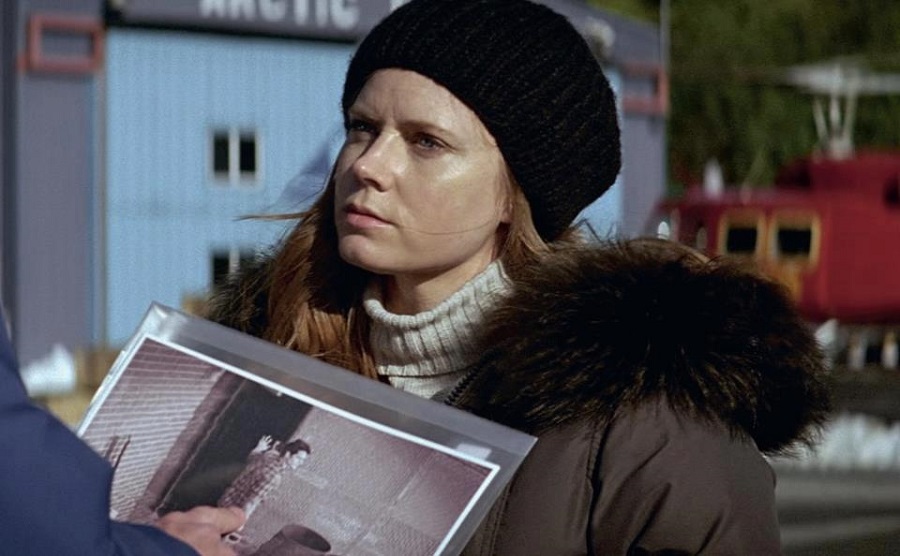
Unfortunately, the character is very underwritten. The writers have, wisely I think, dispensed with the "two-person love triangle" concept of Lois, who is supposed to be a great reporter, yet unable to tell that the man she is in love with is, in fact, her milquetoast co-worker Clark Kent. Charming though it is, that scenario has always ignored the fact that if Superman can't trust Lois, he has no business loving her in either of his identities. The new dynamic is that Lois is sort of the Boswell to Kal-El, going so far as to (almost) give him his nom du guerre and becoming a trusted partner, a resourceful romantic interest/sidekick who can move the plot and even get the hero out of trouble in certain situations. This newer avenue makes Lois's frequent damsel in distress situations a little more palatable, but one still feels that screen time given to her Daily Planet co-workers would have been more interesting if they were in service to Lois demonstrating her capabilities as a reporter as opposed to setting up victimization set pieces. This isn't to say that Amy Adams doesn't give a great performance; she's just not given as much to work with as she could have been.
The second thing that the film gets wrong is even more shocking and speaks to what I see as a deep misunderstanding of the source material, and I'm referring to the violence and the eventual execution of General Zod. As to the general comic book violence, the film uses special effects in a way that no Superman film has before. The Man of Steel does the usual Superman business of flying, being bulletproof, projecting heat rays from his eyes, and being incredibly strong. And I grant you that the destruction that would follow a group of villains with Superman's range of abilities would be massive, especially if they were fighting one another. But Superman, as a story or myth, really isn't about slugfests.
At the time Superman was created, the 1930s, his stories were on a much smaller scale. In his earliest adventures, Superman saves a woman from the electric chair by storming the Governor's mansion, stops a lynching, interferes with a man beating his wife, torments a corrupt politician in Washington D.C., and saves Lois Lane from an abduction by gangsters (one of whom is attracted to her and pushes Clark out of the way to take her against her will). Created by Jerry Siegel and Joe Shuster, two Jewish teenagers living through the Great Depression, the early Superman is a sort of anarchistic angel, a merry strongman who acts benevolently wherever he finds an injustice. The idea of Superman as a Christ-figure (as presented in Superman Returns as well as this film, and to a lesser extent in the Christopher Reeve films) ignores the purpose of the character. If anything, Superman is more of a Moses-figure (replace floating down the Nile with a spaceship and they even have the same basic origin story), an exceptional man who protects and gives wisdom, who shows a moral way of living and uses his great abilities not for personal gain, but for the purpose of inspiring ordinary people with his example.
A page from Action Comics #1, the first appearance of Superman.
It's inconsistent, though. If you're setting up Superman as a Christ-figure, why is he punching anyone? If Superman is meant for greater things, to inspire humanity, and if he's like a god to us mortal and fragile human beings, why is he not setting a higher moral example? Specifically, why is he unable to resolve the problem presented by General Zod without killing him?
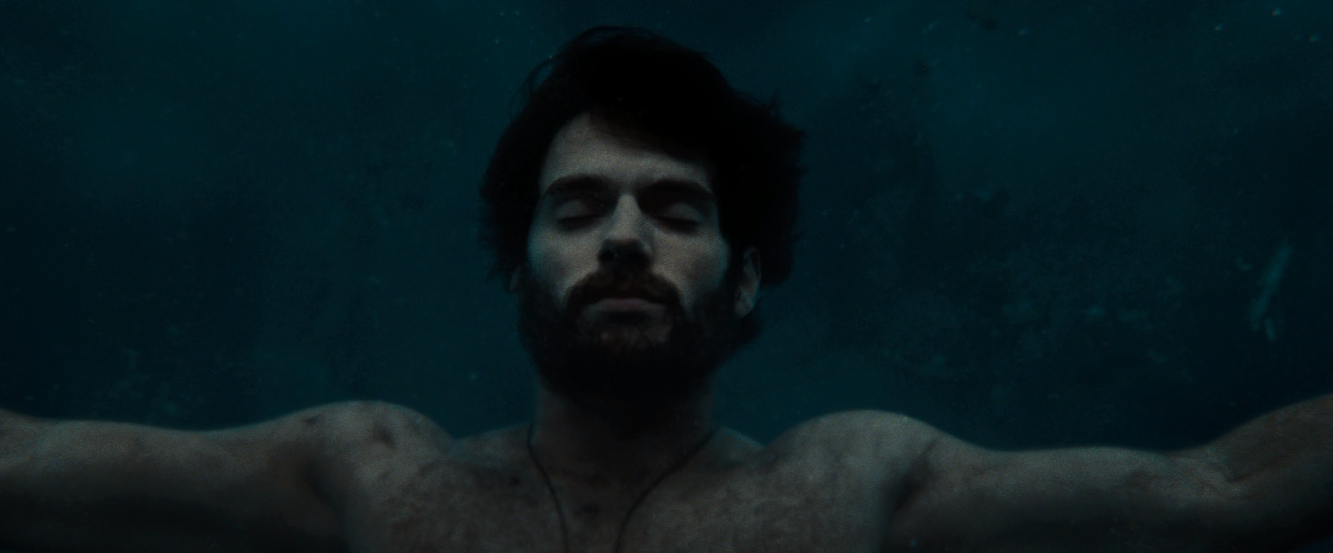
Taking "Superman as Christ-figure" to the next level by giving him a beard.
I'm not suggesting that there was a better way of resolving the Zod plot-line than killing him off. I can buy that it made dramatic sense, or that Shannon might not have wanted the door open for a return engagement, but there should have been a way of doing it without making Superman the executioner. The idea that Kal-El's parents sent him to Earth because they had hope, and the idea that he was raised as Clark Kent to resolve matters with his mind and use his gifts for good, and the thread that his parents see great things for him is entirely negated for me by the idea that this "greater thing" is a spontaneous and knee-jerk execution.
Maybe if there was time for him to talk about the consequences of his actions and discuss the toll it would obviously take on him. Maybe if he made a vow that he would never again take a life for any reason. Maybe if he indicated that he found his actions distasteful and against his own principles. Maybe if any of that had happened, and Superman refuted the notion that the ends justified the means, I could have accepted it.
There's another, bigger logic hole here, though. If these Kryptonians are so powerful and indestructible that they can beat and bash one another without drawing blood or raising so much as a single bruise, how is it possible for even Kal-El to snap Zod's neck? It would seem unlikely to me, given what is established in the film.
Superman, again from Action Comics #1, stopping an execution, rather than performing one.
I think, though, the bigger problem here is an overall super hero fatigue. These films have become visual wonders, but the stories are lacking in the imagination and thoughtfulness of their paper counterparts. More super hero flicks are on the way, so I may be tilting at a windmill. I think that the wasted opportunity here was to do something more uplifting and life-affirming than the bleakness of Nolan's Batman films and Snyder's earlier Watchmen. The darkness suited those stories, I suppose, but Superman demands a lighter approach. It seems that there will be other opportunities to get it right, as sequels follow superhero movies like stench follows garbage.
Recent talk of a Boba Fett solo film has boosted the breakout character's already over-inflated profile. I'm not sure what to think about *any* of the upcoming STAR WARS films, other than sort of basking in the surreal nature of extending the film franchise into the next decade and beyond.
Anyone who’s seen one of Wes Anderson’s films is prepared
for the stylistic and aesthetic idiosyncrasies of this director. Just as you
can tell a Robert Altman or David Lynch film without too much effort, Anderson offers his films
a visual signature that’s fairly unmistakable. If you haven’t seen a Wes
Anderson film, I’d be forced to describe MoonriseKingdom
as Charles M. Schulz’s comic strip
Peanuts as adapted by Stanley Kubrick. And if I have to describe Stanley
Kubrick to you, well… you’re on your own.
I think that Anderson shares qualities with all three of
those great American film mavericks, but particularly shares traits with
Kubrick; the meticulously arranged shots, the ironic and godlike detachment, and
the intricate attention to detail join hands and create a film experience that
ups the stakes on all of Anderson’s pet notions. More than any of his previous
work, this feels like the film that he has been working up to and, because of
that, it may prove to be his first true masterpiece.
Unlike his previous films, which are set in the present, but
filled with objects and fashions from the recent past, MoonriseKingdom
takes place in the year 1965, a time shortly before the director was born. In a
time where a scout master could still smoke in front of children and children
still had library cards, Sam (Jared Gilman) and Suzy (Kara Hayward) meet one
another at a church performance and strike up a swift and intense junior league
romance. Both feeling ostracized from society, Sam as an orphan overseen by
Social Services (personified by Tilda Swinton, enacting Mary Poppins’ evil
twin) and Suzy as the “troubled child” of disengaged lawyer parents (Bill
Murray and Frances McDormand), they plot to run away. Everyone seems to be
running away from something, whether it’s Scout Master Ward (Ed Norton) who
claims he’s a “Khaki Scout” first and a math teacher in his spare time, or
Captain Sharp (Bruce Willis, in fine form) who is the policeman of the
storybook-like New Penzance Island and is engaged in a sort-of affair with Suzy’s
mother. Like the comic strip I mentioned above, Sam and Suzy enjoy an
adult-like perspective straight out of the misadventures of Charlie Brown
(tellingly, the scout troop’s dog is named Snoopy). Unlike Peanuts, the adults in the film are present and seem to be just as
bewildered by the world in which they’ve found themselves. Like many of Anderson’s films, nobody
really has a sense of humor about themselves and everyone is busy in the work
of losing their innocence or pining for it.
MoonriseKingdom
is a funny, sweet, quirky film, Anderson’s
best and most coherent vision since The
Royal Tenenbaums, and a film that I am already looking forward to watching
again.
It takes quite a bit to court controversy these days. We’re a bit numb. A relatively sophisticated person might approach this film with a great deal of skepticism, in spite of the giant “Inspired by True Events” that blares in a screen-filling font before the title. A number of people walked out of screenings, feeling that they were watching some sort of exploitation film or, at the very least, someone’s sick fantasy. I don’t think that’s what director Zobel was attempting to do; I think there are some deep questions that need to be asked about this film.
If you haven’t seen it yet, as it’s still in wide release, I’m not really ruining the film by telling you the following: Compliance tells the story of a prank phone call to a fast food restaurant that leads to a series of troubling events. The only person with any authority for the first hour and a quarter is restaurant manager Sandra (a great performance by Ann Dowd), who is taken in by the prank caller (Pat Healy, who joins the likes of Bill McKinney, Ted Levine, and Peter Lorre in the pantheon of creepy movie character portrayers), accepting that he is a police officer, even as he accuses employee Becky (Dreama Walker) of stealing from a customer’s purse and subjecting her to a number of humiliating searches.
While there are aspects of this that strain credulity, the real question is this: Why did Sandra give up her authority so quickly to a stranger she only spoke to over the phone? Well, the pranker didn’t call NASA… he called a fast food restaurant on the busiest day of the week. The exploitation takes a deeper level of perversion when you realize that the prankster is preying not only on Becky, but also on Sandra, by playing with her fears of her regional manager (who’s name the caller has already looked up) and alternately flattering her for meeting his demands. Sandra is manipulated because she’s interested in doing the right thing, motivated by pleasing her superiors, too tired from working to think straight, and (frankly) not educated enough to question authority, real or otherwise.
Fans of great film acting have a new heroine in Ann Dowd, who is never unbelievable as Sandra, resists the temptation to make her seem too stupid, and shows incredible depths to a character who might have been made comical in less capable hands. Sandra maintains a certain level of dignity that makes it difficult for her subordinates to take her too seriously when she tries to be a regular person. Outside of her relationship with Van (Bill Camp), who also gets drawn into the story, it seems that Sandra takes her job seriously, perhaps too seriously. Ann Dowd deserves the recognition she will be getting this year, hopefully at awards ceremonies and in further casting.
And so, more than anything, more than the uncomfortable nude scene and the excruciating manipulations of the prank caller, the film is really about the importance we put into our jobs, what we think is moral, the information we use to process our decisions, and who we choose to serve and obey. It’s a well-made and thoughtful film that deserves attention and discussion.